

Voices: On Wonder
"The Wonder of the Ordinary," an essay by Mary Beard. Apropos: René Descartes on "the root of wonder"; Charles Baxter on the wonders of P. T. Barnum.

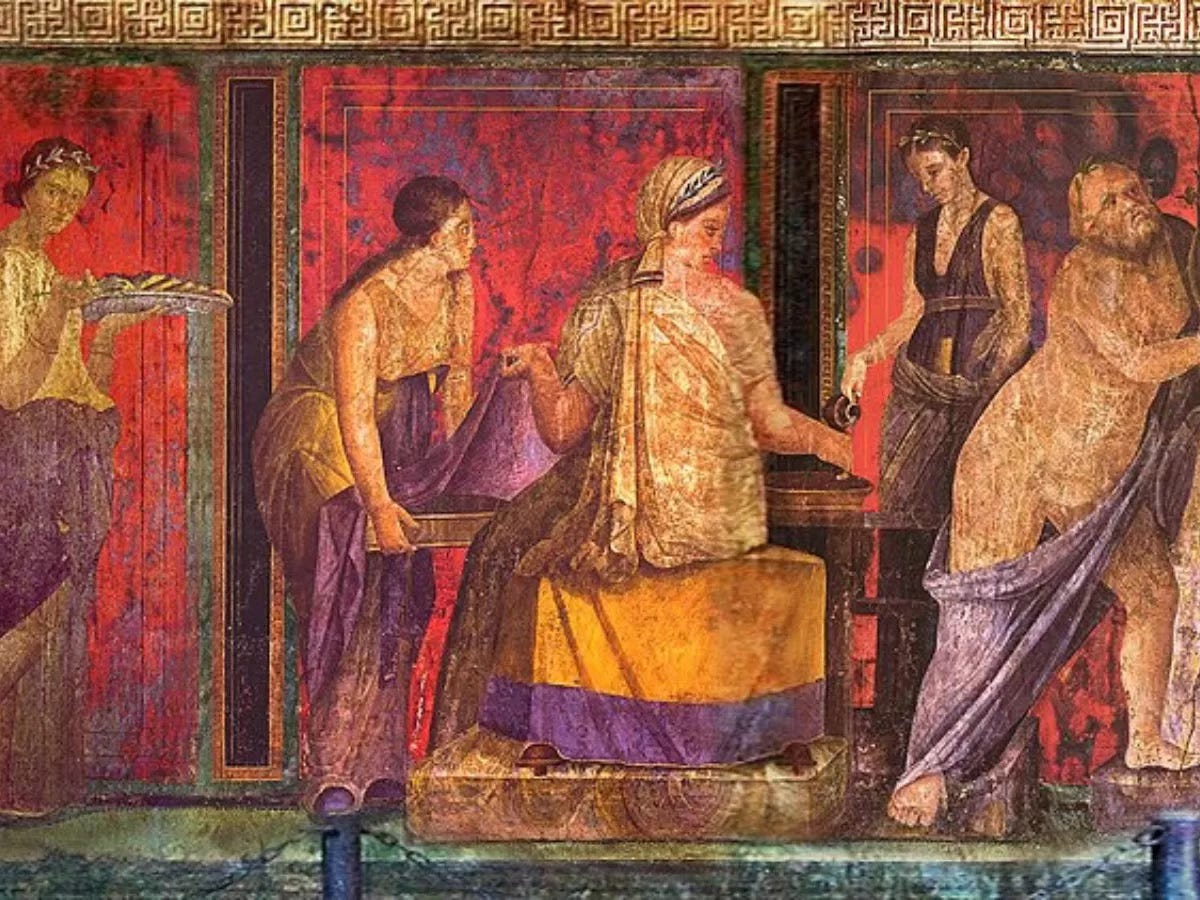

From “The Wonder of the Ordinary” by Mary Beard
In ancient Greek, my experience in the museum would have been called thauma: a “wonder” or “wonderment.” But it has a more complicated range of meanings than those translations suggest. Thauma was a loaded ancient catchword. At its simplest, it could describe the feeling of being amazed, as well as referring to the object that caused the amazement. That Egyptian bread was a thauma itself, and it also left its young viewer in a state of thauma.
Some wonders are on a grand or even cosmic scale: the pyramids, showers of meteorites or eclipses of the sun, for example. For me it was the wonder of the ordinary—and those moments of feeling almost unbelievably close to people who lived thousands of years ago—that sparked my excitement in the deep past. Ever since, this has underpinned my life as a classicist (the word commonly applied since the nineteenth century to those who study the ancient Greeks and Romans). Above all, there is something wondrous—thaumatic, you might say—about our relationship with the classical world.
I am happy to admit I did not at first thrill to the established “greats” of classical literature and art. Don’t get me wrong. Over the years, that has changed, and those greats have helped me to reframe and refresh how I understand the modern—as well as the ancient—world, in ways I could hardly have thought possible. I don’t believe that I would now reflect on conflicts of gender in the way that I do if I had not been encouraged (and in high school occasionally forced) to think carefully about the figure of Medea in Euripides’ play, who murdered her children to exact revenge from her faithless, slime-bag husband; or about Virgil’s Dido in the Aeneid, who took her own life when abandoned by her lover Aeneas, as he refused to allow passion to divert him from the call of “duty.” And decades ago, it came as an unforgettable surprise to discover that some of the most powerful critiques of Roman imperialism were penned by Romans themselves. No one has summed up the effects of empire more sharply or succinctly than the Roman historian Tacitus: “They make a desert and call it peace” (in Latin just five words, ubi solitudinem faciunt pacem appellant). But I would be lying if I claimed that my first visceral engagement with the ancient world came from Euripides, Virgil, Tacitus, or, for that matter, the Parthenon sculptures.
It came instead from the day-to-day, humdrum, intimate, and memorably dirty side of the classical past. But thauma does not stop there. Among its range of ancient meanings was another, more surprising and more cerebral one. For thauma also signaled intellectual puzzles and problems that engaged the brain, and made you wonder (here English shares some of this double sense with Greek) about what exactly the object of amazement was, what it meant, and how to explain it. Both Plato and his fellow philosopher Aristotle, looking back from the fourth century bc to the origins of Greek intellectual enquiry a few hundred years earlier, argued that thauma kick-started philosophy itself. “It’s because of thauma that people embarked on philosophical thinking in the first place,” Aristotle insisted. For him wonderment was not something that stood in the way of hard thinking (though some ancient and modern writers have held that view); it was almost a precondition for it.
“It’s because of thauma that people embarked on philosophical thinking in the first place,” Aristotle insisted.
This version of thauma opens up bigger theoretical questions about the very nature of the past and our experience of it: How close we can ever get to antiquity? How can we access the lives of those who came before us? What does it mean to come face to face with history? How can we ever begin to make sense of it all? As Plato and Aristotle might have put it: what kind of enquiry is our enquiry into deep antiquity? The classical world, wherever you find it, is both wonderfully familiar and tantalizingly inaccessible, or at least not quite what it seems. For me, classics has offered a powerful way into those dizzying questions of how to pin down our relationship to the past. That’s another reason why I’ve never been able to leave the subject alone.
Read the entire essay on the Lapham’s Quarterly website.
Adapted from Talking Classics: The Shock of the Old by Mary Beard, published by the University of Chicago Press. Copyright © 2026 by Mary Beard Publications Ltd. Reprinted with permission of the author and University of Chicago Press. All rights reserved.
CONTRIBUTOR
Mary Beard is a distinguished classicist, international best-selling author, and popular television personality. She is professor emerita of classics at the University of Cambridge, a fellow of Newnham College, and professor of Ancient Literature at the Royal Academy. Her books include SPQR: A History of Ancient Rome, Women and Power: A Manifesto, Twelve Caesars: Images of Power from the Ancient World to the Modern, and Emperor of Rome: Ruling the Ancient Roman World.
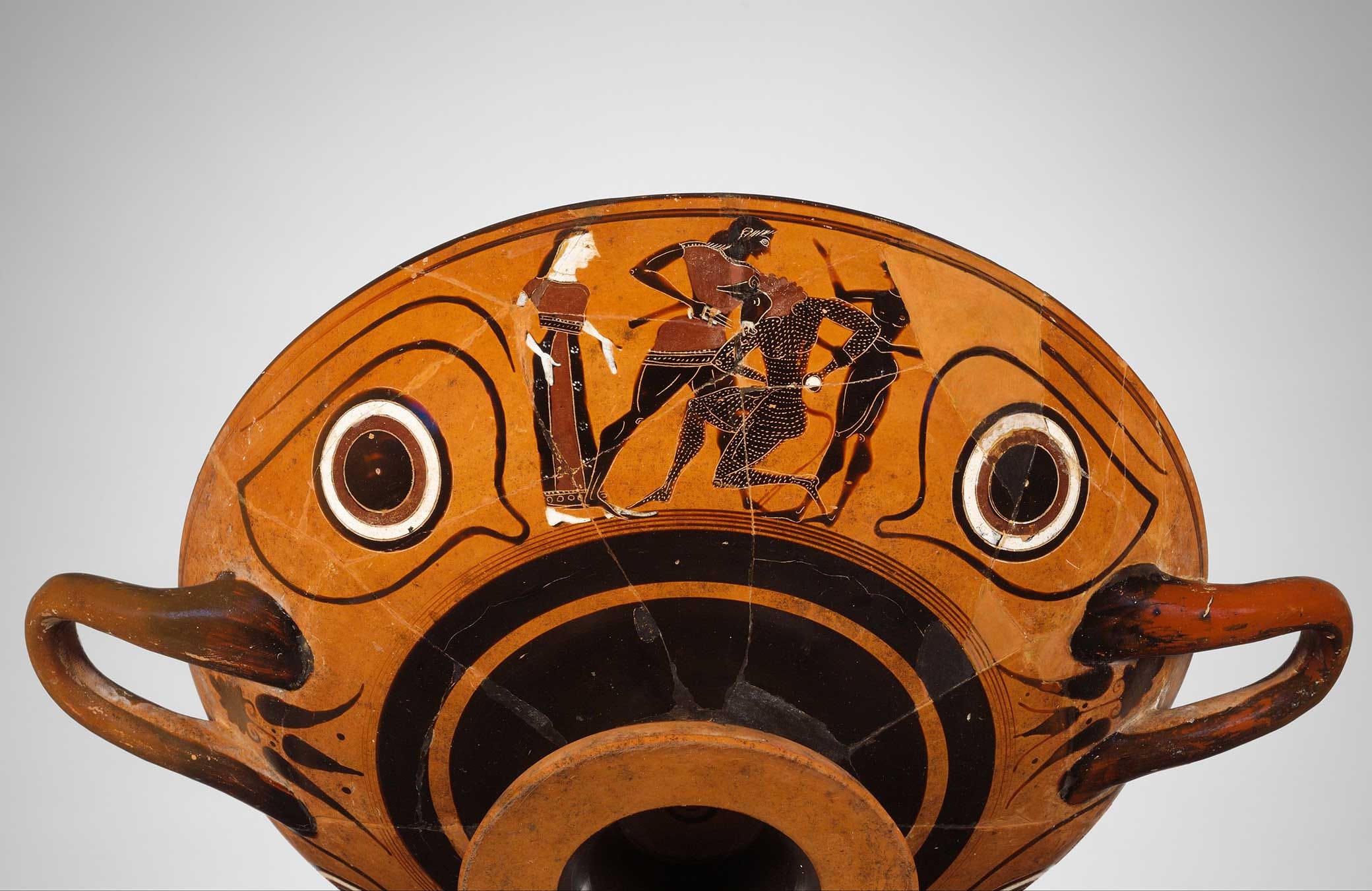
René Descartes grasps the root of wonder
It can be said in particular of wonder that it is useful in making us learn and retain in our memory things we have previously been ignorant of. For we wonder only at what appears rare and extraordinary to us.
And nothing can appear so to us except through our having been ignorant of it or through its being different from things we have known, for it is in virtue of this difference that it is called extraordinary. Now even though something which has been unknown to us may be newly present to our understanding or our senses, we do not on that account retain it in our memory unless the idea we have of it is strengthened in our brain by some passion, or alternatively by the application of our understanding, which our will fixes in a particular state of attention and reflection. And the other passions can serve to make one notice things which appear good or evil, but we just have wonder for ones which appear rare only. Accordingly, we see that those who have no natural inclination to this passion are ordinarily very ignorant.
From The Passions of the Soul. Having taken a law degree from the University of Poitiers in 1616, Descartes decided to abandon formal tutors and study “the book of the world.” He was visited by three dreams in 1619 that—he went on to say—revealed to him his destiny: later that year he invented analytic geometry and formulated a universal method of deductive reasoning. Around this time, Descartes became interested in the emergent Rosicrucian movement, later practicing medicine free of charge, one of the brotherhood’s tenets.
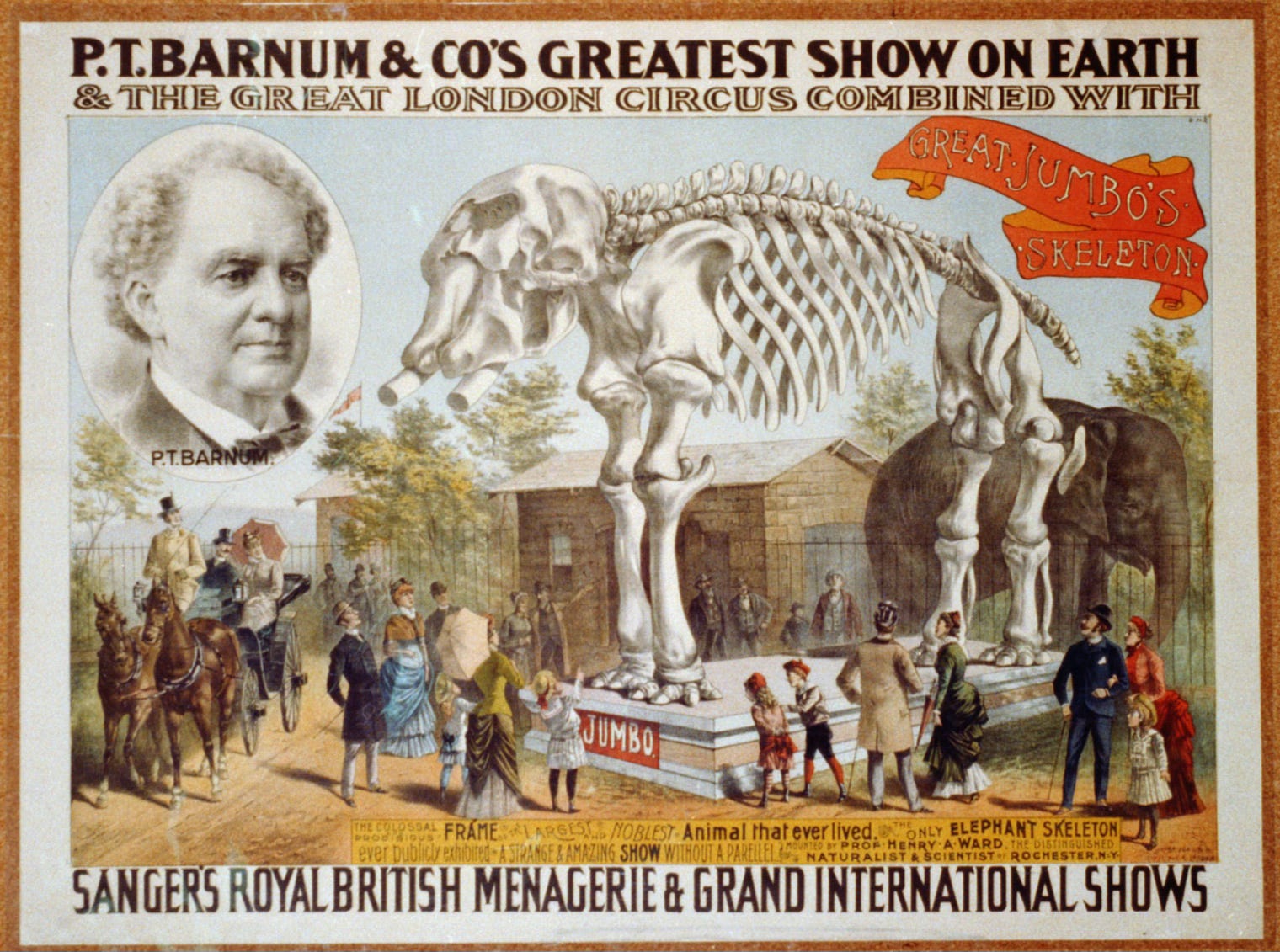
From “Hatching Monsters” by Charles Baxter
Barnum discovered that if your show generates angry letters to the editor, so much the better: people will be compelled to see the spectacle for themselves “to determine whether or not they had been deceived.”
Most of his actual exhibits used for making money have little interest for the modern reader except as placeholders for his publicity schemes. He began his career by selling lottery tickets, and the tickets he would later sell for the Fejee Mermaid, a stiff and stuffed monkey, its lower half encased in scales relied on a similar impulse in the buyer. In both cases, Barnum was promising an escape from ordinary life. But there was more: the ornithorhynchus, the connecting link between the seal and the duck! The flying fish, two distinct species!! The proteus sanguihus!!! Etc. Admission, 25¢. These wonders are all forgotten. Nothing is as dispiriting as a wonder whose wonder has ebbed.
Nothing is as dispiriting as a wonder whose wonder has ebbed.
Wonder is the remnant of religious faith when religious doctrine has proved inadequate to a feverish wish to believe in something, anything. Suppose that prayer has not brought you your reward. You want to put your faith in a miracle. Where is that miracle? You have, after all, been taught to believe. About such longings, Barnum was very shrewd. He knew that spiritual peacefulness, a calm in the soul (we would also call it “self-possession”), was largely missing in the American experience and that this absence derived, as he notes, from “a practicalness which is not commendable.” The citizen has worked hard with little result. He cannot stay calm in the land of milk and honey if no milk and honey has flowed his way. Promises have been broken. Therefore he goes to Barnum’s show with high expectations. Barnum knew that America was a nation of believers who, thanks to their pragmatism, didn’t actually believe in much of anything, although they said that they did. This cultural setup created a variety of believers without anything to believe in, a vacancy that he filled with wonders in his American Museum, housing dioramas, cameleopards, and a miniature model of Niagara Falls with real water.
Read the entire essay on the Lapham’s Quarterly website.
CONTRIBUTOR
Charles Baxter’s most recent novel Blood Test: A Comedy was published in 2024 by Vintage Contemporaries. He is the author of several novels and short story collections as well as three books of literary criticism. He lives in Minneapolis.
Francine Prose on Charles Dickens and Hans Christian Andersen
Listen to the latest episode of The World in Time.

Lapham’s Quarterly is a project of the American Agora Foundation, which is dedicated to fostering an appreciation of, and acquaintance with, the uses and value of history. Please help us continue our work. Donate today.