

Voices: Prose, Dickens, Andersen
“Christmas Punch in June,” new fiction by Francine Prose. Apropos: Hans Christian Andersen moons around in Venice. Charles Dickens drifts like fog through London's foggy streets.

From
Christmas Punch in June
by Francine Prose
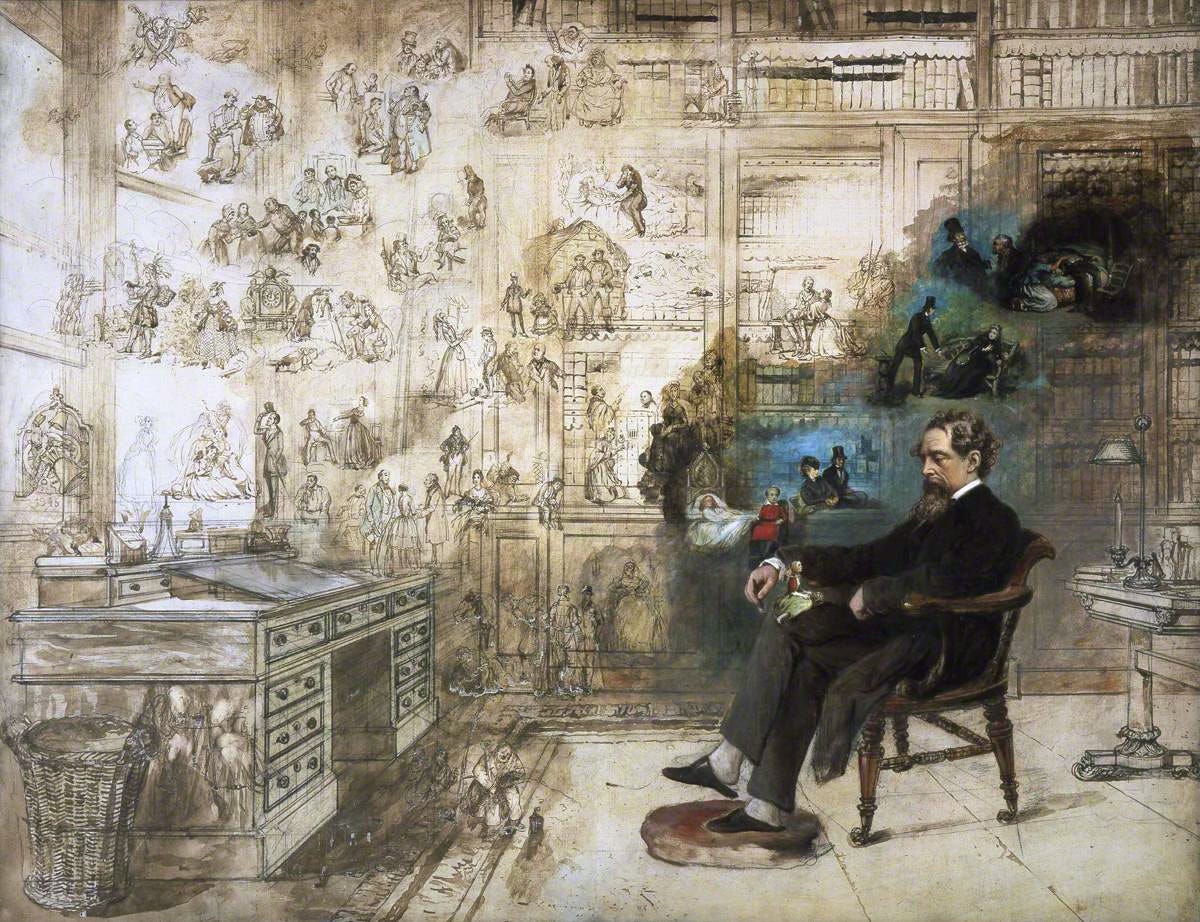
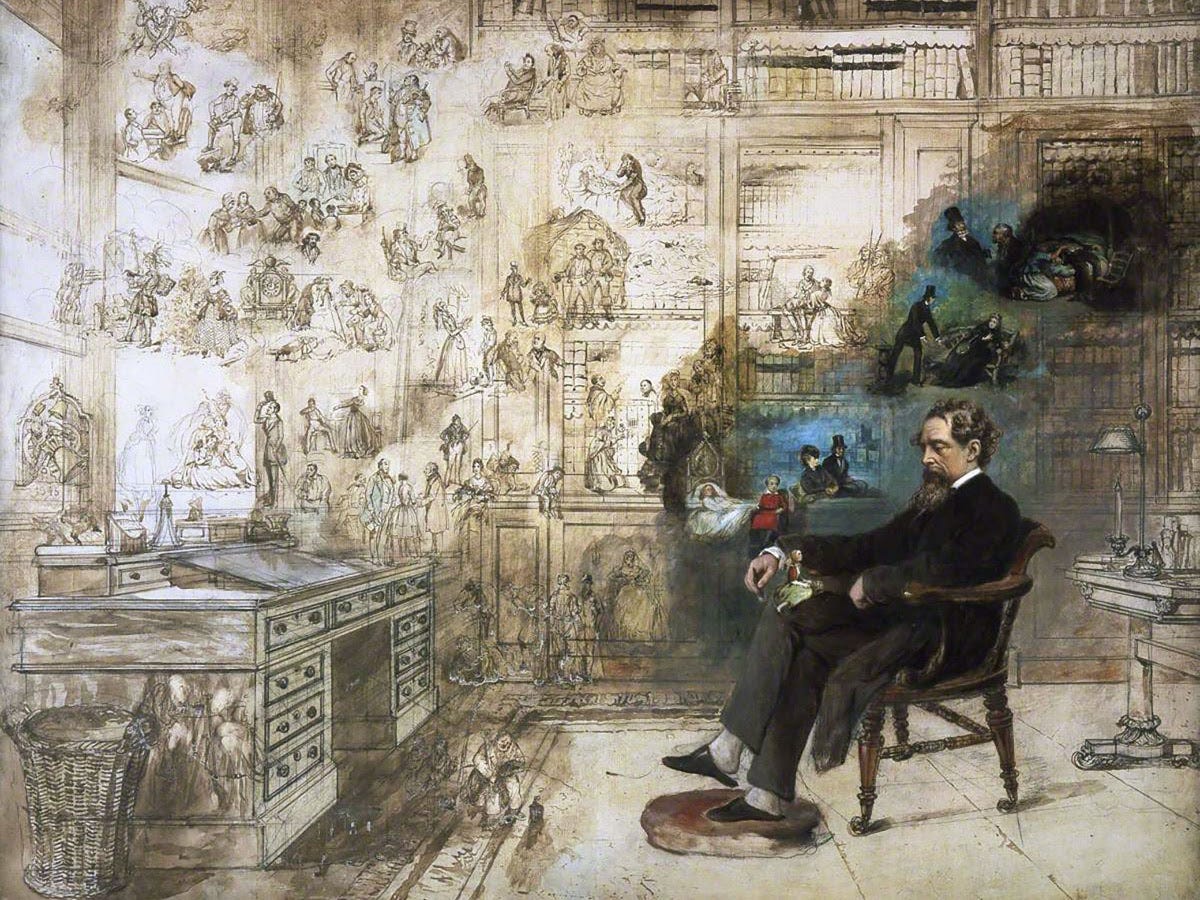
On the night Charles Dickens first met Hans Christian Andersen, he had drunk a few drops over his usual habit, but only because his hostess, Lady Blessington, had asked him to make the punch and he’d had to keep testing his product. Past a certain point, he had a tendency to invite strangers to visit him at home, regardless of whether he wanted to see them or not. Sometimes, the next morning, he awoke afraid that someone whose name he’d forgotten was about to knock on his door.
It was an argument for moderation. Or it would have been if those invitations hadn’t burbled up from such a deep well of feeling. By the end of those dinners, he loved his new friends. He wanted them to meet his family and see his home.
If he regretted his impulsiveness later, he reminded himself that, though his close friends were frequent visitors, no strangers had ever taken him up on his offer. He’d certainly never invited the lunatic who invaded his London home, talked his way past the servants, and left only when Dickens threatened to summon the police.
He couldn’t be blamed for seeing his household as a shining light, a source of warmth that could brighten the desolate soul and melt the frozen heart. He liked the image of himself—humble, unspoiled by fame, ridiculously generous—that his reckless hospitality painted.
He and Andersen met at a dinner party at Lady Blessington’s London home. He never knew if the Danish writer understood that it was scandalous just to be there. A popular hostess, a cultured widow, Lady Blessington was said to be living in sin with her young son-in-law, the charming Count d’Orsay, who used to be married to Lady Blessington’s stepdaughter.
He could never put that in a novel. His readers would turn against a British writer who could even imagine something so French.
No one was sure what kind of sin the couple were living in. The sins of business fraud seemed likelier than the sins of the flesh. So many mysteries surrounded their choices. It was useless to ask Lady B. why portraits of Napoleon decorated every room. She’d say, He was a hero.
The other recurring art theme was the myth of Danaë, pictured naked, sprawled in bed, beneath a shower of gold.
He welcomed Lady Blessington’s invitations. If there was anything he enjoyed, it was the spectacle of an impecunious, crooked couple fooling their friends into thinking that they were wealthy and honest. He would use what he’d seen in these drawing rooms for Mr. and Mrs. Merdle, Little Dorrit’s dishonest financier and his wife.
Count d’Orsay and his former mother-in-law spent way beyond their means. It made their parties more enjoyable, brighter, and more intense, like bacchanals in Pompeii before Vesuvius erupted. Marvelous wine, marvelous food. Absolute abundance. Scandal added bubbles to the champagne, sweetness to the puddings. It was far more exciting than the homes of one’s married friends, the threadbare sitting rooms smelling of baby sick and curdled milk. No one brought his wife to Lady Blessington’s. No one admitted to going there, though everyone went, if he could.
He had been happy the night he met Andersen. It never failed to amaze him, the speed and grace with which good food and drink erased his worries, obligations, and commitments, not gradually but all at once and without his even knowing. It was like a painless operation, like the disappearance of a worrisome twinge you forget as soon as it’s gone.
By the second cup of punch, the pressure in his chest had vanished. Why had he been so gloomy? Something good was about to happen—if not tonight, then soon.
Read the rest of “Christmas Punch in June.”
CONTRIBUTOR
Francine Prose, a distinguished writer in residence at Bard College, is the author of twenty-three novels, most recently Five Weeks in the Country, and many works of nonfiction, including a collection of essays, What to Read and Why. A member of the Lapham’s Quarterly editorial board, she has guest-edited three issues: Night (Winter 2019), Epidemic (Summer 2020), and Friendship (Spring 2021). She is the editor-at-large of Lapham’s Quarterly.
1840 | Venice
Tourist Destination
Hans Christian Andersen pays homage to Venice.
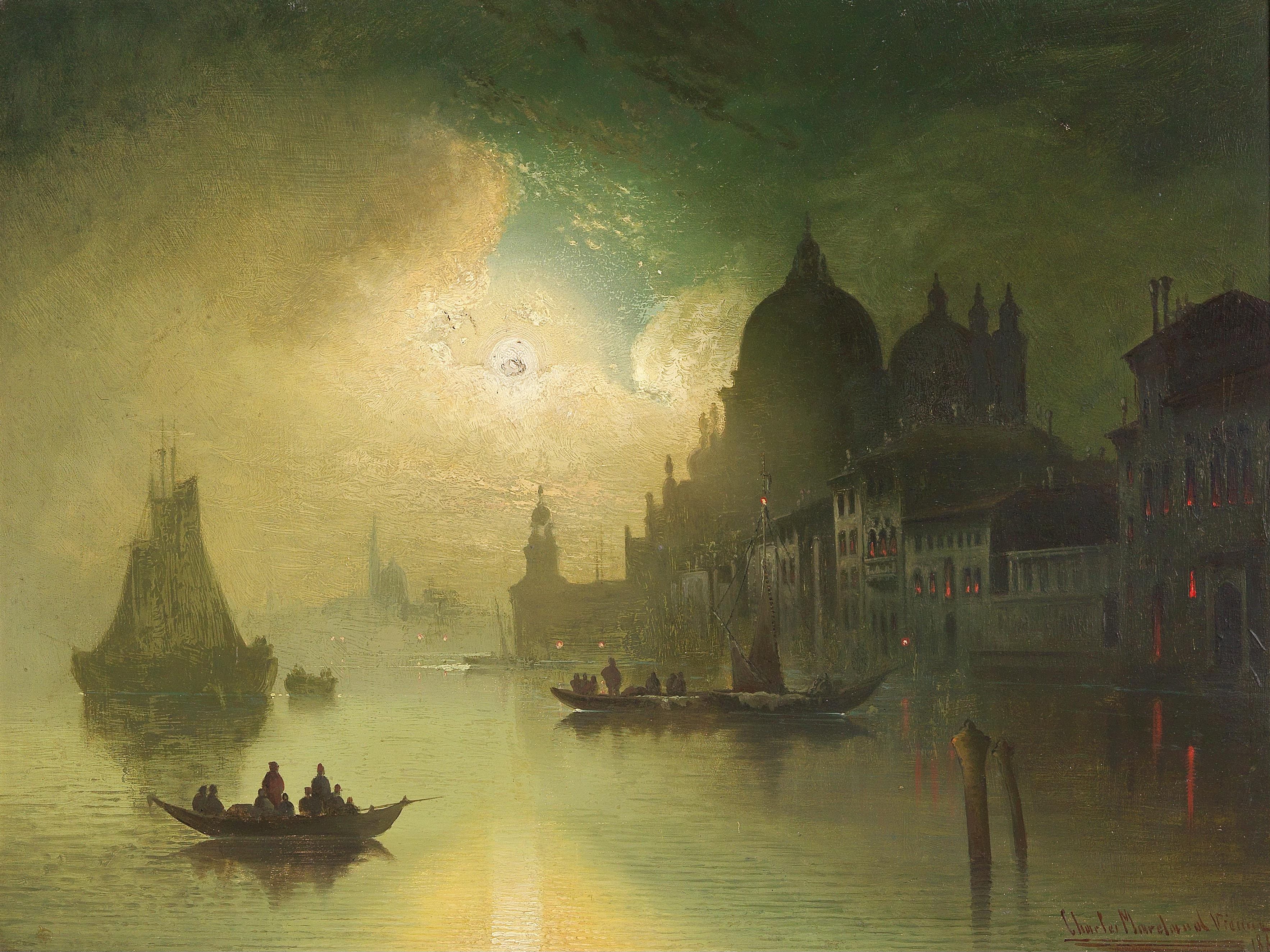
“I have spoken to you of Pompeii,” said the Moon, “that corpse of a city, exposed in the view of living towns. I know another sight still more strange, and this is not the corpse but the specter of a city. Whenever the jetty fountains splash into the marble basins, they seem to me to be telling the story of the floating city.
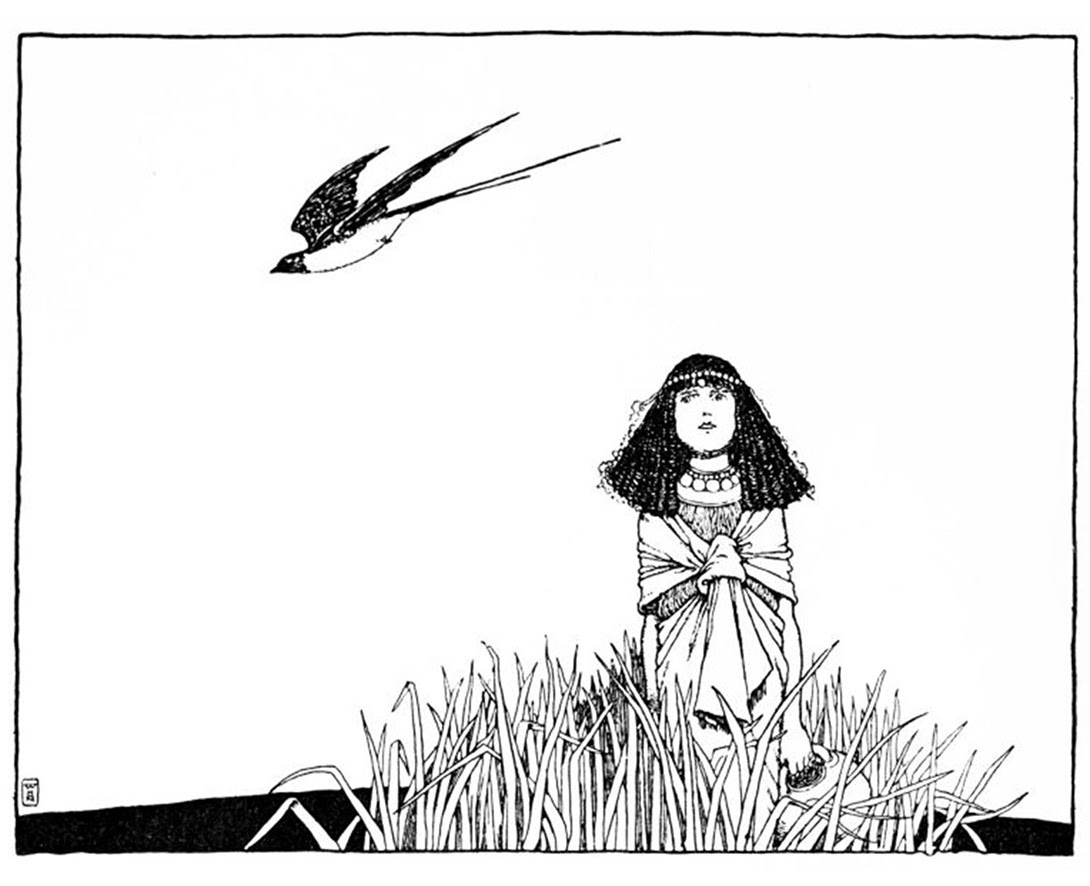
Yes, the spouting water may tell of her, the waves of the sea may sing of her fame! On the surface of the ocean a mist often rests, and that is her widow’s veil. The bridegroom of the sea is dead, his palace and his city are his mausoleum! Do you know this city? She has never heard the rolling of wheels or the hoof tread of horses in her streets, through which the fish swim, while the black gondola glides spectrally over the green water. I will show you the place,” continued the Moon, “the largest square in it, and you will fancy yourself transported into the city of a fairy tale. The grass grows rank among the broad flagstones, and in the morning twilight, thousands of tame pigeons flutter around the solitary lofty tower. On three sides you find yourself surrounded by cloistered walks. In these the silent Turk sits smoking his long pipe, the handsome Greek leans against the pillar and gazes at the upraised trophies and lofty masts, memorials of power gone. The flags hang down like mourning scarves. A girl rests there—she has put down her heavy pails filled with water; the yoke with which she has carried them rests on one of her shoulders, and she leans against the mast of victory. That is not a fairy palace you see before you yonder, but a church: the gilded domes and shining orbs flash back my beams. The glorious bronze horses up yonder have made journeys, like the bronze horse in the fairy tale—they have come hither, and gone hence, and have returned again. Do you notice the variegated splendor of the walls and windows? It looks as if genius had followed the caprices of a child in the adornment of these singular temples. Do you see the winged lion on the pillar? The gold glitters still, but his wings are tied—the lion is dead, for the king of the sea is dead; the great halls stand desolate, and where gorgeous paintings hung of yore, the naked wall now peers through. The lazzarone sleeps under the arcade whose pavement in old times was to be trodden only by the feet of high nobility. From the deep wells, and perhaps from the prisons by the Bridge of Sighs, rise the accents of woe, as at the time when the tambourine was heard in the gay gondolas, and the golden ring was cast from the galley ship Bucentaur to Adria, the queen of the seas. Adria! Shroud yourself in mists; let the veil of thy widowhood shroud your form, and clothe in the weeds of woe the mausoleum of your bridegroom—the marble, spectral Venice.”
CONTRIBUTOR
From What the Moon Saw. Born in a slum in 1805, Andersen as a boy attended the Royal Theater in Copenhagen in the hopes of becoming an actor. Already a successful novelist in 1835, he published to unfavorable reviews his first installment of fairy tales, among them “The Princess and the Pea” and “The Tinderbox.” Two years later he published “The Little Mermaid” and “The Emperor’s New Clothes.”
c. 1835 | London
Never Can There Come a Fog Too Thick
Charles Dickens on mud, fog, and the law.
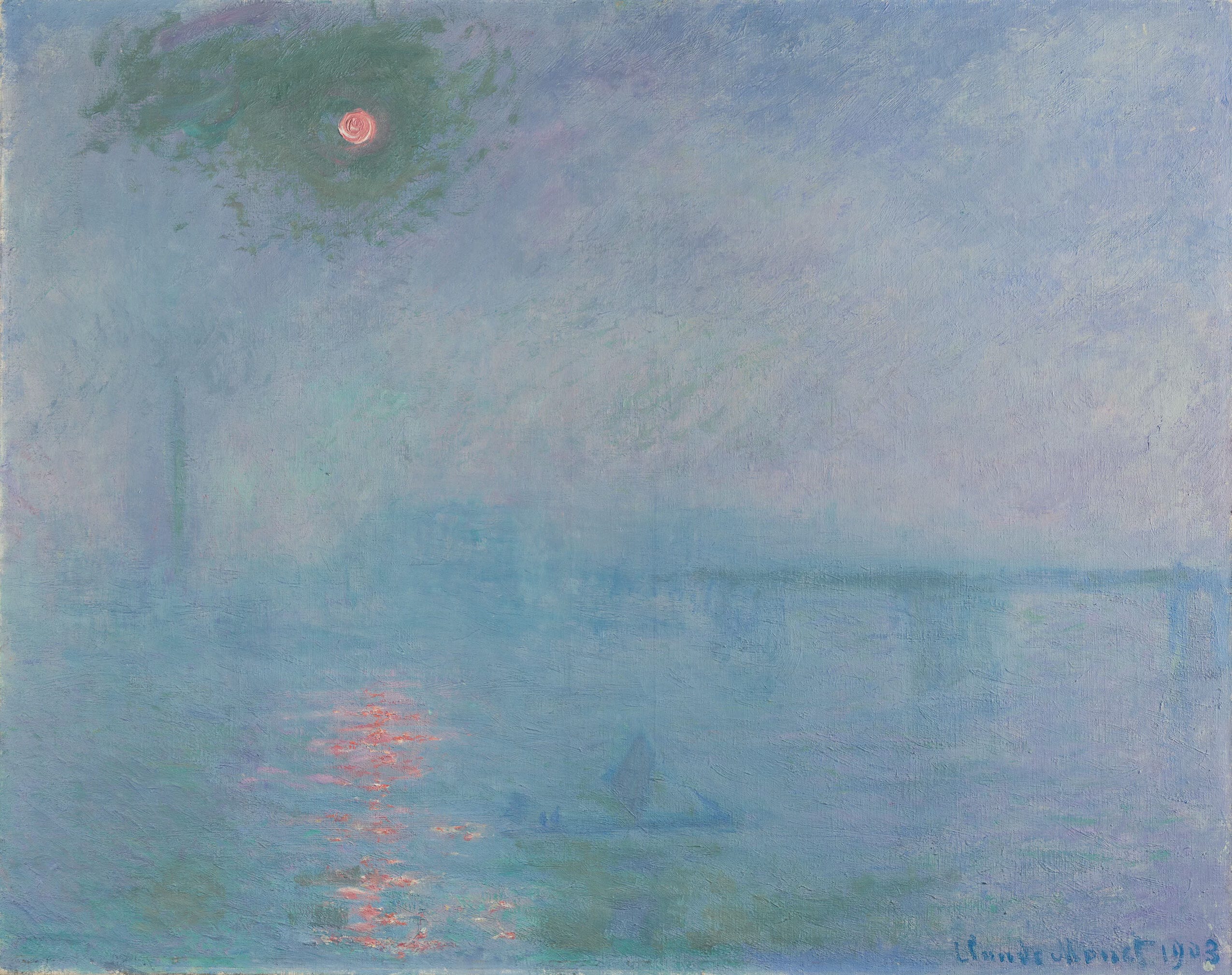
London. Michaelmas term lately over, and the Lord Chancellor sitting in Lincoln’s Inn Hall. Implacable November weather. As much mud in the streets as if the waters had but newly retired from the face of the earth, and it would not be wonderful to meet a megalosaurus, forty feet long or so, waddling like an elephantine lizard up Holborn Hill. Smoke lowering down from chimney pots, making a soft, black drizzle, with flakes of soot in it as big as full-grown snowflakes—gone into mourning, one might imagine, for the death of the sun. Dogs, undistinguishable in mire. Horses, scarcely better, splashed to their very blinkers. Foot passengers, jostling one another’s umbrellas in a general infection of ill temper and losing their foothold at street corners, where tens of thousands of other foot passengers have been slipping and sliding since the day broke (if the day ever broke), adding new deposits to the crust upon crust of mud, sticking at those points tenaciously to the pavement and accumulating at compound interest.
Fog everywhere. Fog up the river, where it flows among green islets and meadows; fog down the river, where it rolls defiled among the tiers of shipping, and the waterside pollutions of a great (and dirty) city. Fog on the Essex marshes, fog on the Kentish heights. Fog creeping into the cabooses of collier brigs; fog lying out on the yards and hovering in the rigging of great ships; fog drooping on the gunwales of barges and small boats. Fog in the eyes and throats of ancient Greenwich pensioners, wheezing by the firesides of their wards; fog in the stem and bowl of the afternoon pipe of the wrathful skipper, down in his close cabin; fog cruelly pinching the toes and fingers of his shivering little ’prentice boy on deck. Chance people on the bridges peeping over the parapets into a nether sky of fog, with fog all round them, as if they were up in a balloon and hanging in the misty clouds.
Gas looming through the fog in diverse places in the streets, much as the sun may, from the spongy fields, be seen to loom by husbandman and plow boy. Most of the shops lighted two hours before their time—as the gas seems to know, for it has a haggard and unwilling look.
The raw afternoon is rawest, and the dense fog is densest, and the muddy streets are muddiest, near that leaden-headed old obstruction, appropriate ornament for the threshold of a leaden-headed old corporation: Temple Bar. And hard by Temple Bar, in Lincoln’s Inn Hall, at the very heart of the fog, sits the lord high chancellor in his High Court of Chancery.
Never can there come fog too thick, never can there come mud and mire too deep to assort with the groping and floundering condition which this High Court of Chancery, most pestilent of hoary sinners, holds this day in the sight of heaven and earth.
On such an afternoon, if ever, the lord high chancellor ought to be sitting here—as here he is—with a foggy glory round his head, softly fenced in with crimson cloth and curtains, addressed by a large advocate with great whiskers, a little voice, and an interminable brief, and outwardly directing his contemplation to the lantern in the roof, where he can see nothing but fog. On such an afternoon, some score of members of the High Court of Chancery bar ought to be—as here they are—mistily engaged in one of the ten thousand stages of an endless cause, tripping one another up on slippery precedents, groping knee-deep in technicalities, running their goat-hair- and horsehair-warded heads against walls of words, and making a pretense of equity with serious faces, as players might. On such an afternoon, the various solicitors in the cause, some two or three of whom have inherited it from their fathers, who made a fortune by it, ought to be—as are they not?—ranged in a line, in a long, matted well (but you might look in vain for truth at the bottom of it), between the registrar’s red table and the silk gowns, with bills, crossbills, answers, rejoinders, injunctions, affidavits, issues, references to masters, masters’ reports, mountains of costly nonsense piled before them. Well may the court be dim, with wasting candles here and there; well may the fog hang heavy in it, as if it would never get out; well may the stained-glass windows lose their color and admit no light of day into the place; well may the uninitiated from the streets, who peep in through the glass panes in the door, be deterred from entrance by its owlish aspect and by the drawl languidly echoing to the roof from the padded dais where the lord high chancellor looks into the lantern that has no light in it and where the attendant wigs are all stuck in a fog bank! This is the Court of Chancery, which has its decaying houses and its blighted lands in every shire, which has its worn-out lunatic in every madhouse and its dead in every churchyard, which has its ruined suitor with his slipshod heels and threadbare dress borrowing and begging through the round of every man’s acquaintance, which gives to monied might the means abundantly of wearying out the right, which so exhausts finances, patience, courage, hope, so overthrows the brain and breaks the heart that there is not an honorable man among its practitioners who would not give—who does not often give—the warning, “Suffer any wrong that can be done you, rather than come here!”
CONTRIBUTOR
From Bleak House. Dickens worked as a clerk in a solicitor’s office and a court stenographer before he first gained recognition for his fiction in his mid-twenties, publishing the Pickwick Papers in serial form from 1836 to 1837. One of the greatest and most prolific authors of the Victorian era, Dickens oversaw the publication of Oliver Twist in the monthly magazine he edited, Bentley’s Miscellany.
Some changes are coming. We will be bringing our longstanding, weekly newsletter, “Back Matter: From the Archives of Lapham’s Quarterly,” to Substack. Published on Sunday mornings, “Back Matter” will replace “Of a Dreamy Sabbath Afternoon.” Dispatches from the editorial desk will continue, but more occasionally. “Extracts” and “Voices” will be published in alternating weeks. Unabridged, uninterrupted episodes of the podcast will be reserved for paying subscribers. There will be more to come in year two of the Lapham’s Quarterly revival. Stay tuned.
NEW ON LQ’S WEBSITE THIS WEEK
Whither the Humanities? (With Zena Hitz, Justin Smith-Ruiu, and D. Graham Burnett)
Listen to the latest episode of The World in Time.
Francine Prose on Charles Dickens and Hans Christian Andersen
Listen to last week’s episode of The World in Time.
Christmas Punch in June
Francine Prose
“You must visit some time,” Charles Dickens said. “See my house, meet my family.”


Lapham’s Quarterly is a project of the American Agora Foundation, which is dedicated to fostering an appreciation of, and acquaintance with, the uses and value of history. Please help us continue our work.